I'm going to start with some honesty. I almost didn't write this blog for fear of potentially alienating those who feel gender shouldn't be a leadership issue - I've been criticised before for sharing my experiences as a female leader and it's left a small mark. But I decided to ignore this nagging concern and write anyway, because these are the sorts of 'smaller' and 'less visible' issues we're up against and we can't let it quieten our voices.
I also truly believe that everyone is welcome within these types of discussions and raising these issues isn’t (and shouldn’t be) a way to exclude, apportion blame or create a sense of defensiveness, but rather a way to offer a pause for reflection on the things we might all do differently or more/less of.
As International Women’s Day approaches, it feels timely to share some reflections as a female leader and I would hope these are useful for everyone of all genders and gender identities. I'm focusing on women in leadership with some thoughts around the value of allyship - an area I think is incredibly important to embrace and embody, particularly for leaders who truly want to create inclusive, supportive and high-performing organisations. It’s an area I feel I can write on, given my own direct experiences as a former CEO and senior leader but I don’t profess to represent all women – I can only offer my individual thoughts, and hope they add to the wider discussions I know are out there.
So, let’s start with some facts. It is well known and understood that women still face multiple barriers as leaders including – but not limited to (I am purposefully not citing reams of data and research here – there’s plenty of it. A simple Google search will provide a raft of highly credible literature):
- A higher likelihood of exit earlier in leadership tenure – through dismissal, redundancy or resignation
- Lower success rates in securing leadership (especially senior) roles – through application and promotion routes
- Higher rates of discrimination, harassment and/or bias in the workplace
Although it’s likely not the experience of every female leader, I have spoken to enough friends and colleagues, and I’ve read enough data and intelligence to know that these experiences are still happening far too much. I do believe that progress (however small) is being made towards breaking down the barriers which is good, but the rate of change and progression is still too slow. And this is despite unequivocal evidence showing that diverse organisations (and particularly diverse leadership teams) perform better on many metrics (financial, innovation, workforce recruitment/retention).
There are all sorts of contributing factors to the above gender related leadership barriers. Some examples include:
- The maternity penalty – women’s leadership careers are stunted, cut short or put on significant hold due to needing to take time for childcare
- The ‘glass cliff’ – women are often appointed to leadership roles during times of crisis or high-risk situations, making them more susceptible to unfair performance assumptions, burnout or decreased job satisfaction
- The likeable vs competent ‘double bind’ – the traits still too often valued in leadership conflict with traditional, stereotypical female norms and therefore women leaders can be viewed as ‘likeable’ OR ‘competent’. As our understanding as society shifts around these two aspects (what it means to be female and what it means to be a good leader), so too should this issue.
- Bias in hiring and promotion processes and decisions – this is more often the case when decision makers are majority or all male
And these are bigger, more tangible aspects. There are also the more subtle, everyday things we experience too:
- Recognition or credit for your work being attributed to a male colleague
- Being spoken over, cut short of given divided attention
- Being undervalued or underappreciated because you quietly get on with the work rather than shouting from the rooftops about what you’re doing and why
- Being judged on physical appearance - what you wear, how you have your hair, what make-up you wear, etc
- Being in the minority in a room full of peers and colleagues
The list goes on. I accept that many of these things can be experienced by all genders, but they are certainly (consciously or unconsciously) more often levelled our way as women leaders. As I mentioned at the start, these examples are not shared to bemoan the situation or direct judgement, they are simply offered as an insight into our lived experiences and therefore why these discussions are so important to keep alive and to stay open to.
But there is one element I have purposefully left from the list - women leaders often have smaller networks, fewer ‘sponsors’ or champions, and as a result, often must find ways of ‘proving their worth’ that go unseen or underacknowledged. This is where allyship becomes important and offers a way in which we can all work together to address these issues which are holding many good female leaders back.
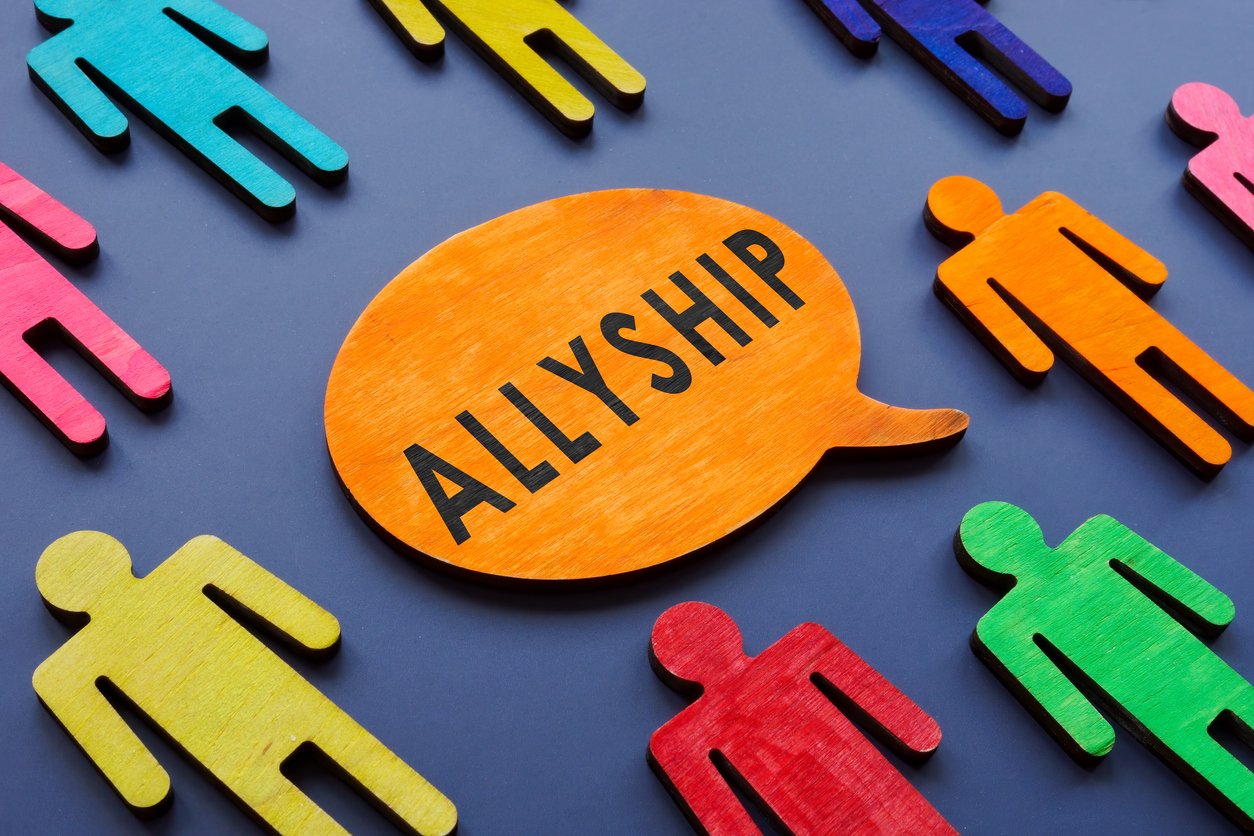
My own definition of allyship is people who offer tangible, consistent support to individuals facing barriers, discrimination and exclusion. In my humble opinion, everyone can be an ally if they choose to be – there is a place for everyone here in ensuring inclusion, equity, equality and diversity. In this context, men AND women can be allies for female leaders.
On the flip side of this, if you are not proactively being an ally, you are potentially being a barrier (inadvertently in many cases I’m sure, but a barrier all the same). I’ve lost count of the number of times when somebody has said that because they have a mother/sister(s)/wife/daughter(s)/niece(s) then it means they support women’s rights and that they’re an advocate for female leaders. Sorry, but knowing women or having them in your lives doesn’t automatically make you an ally, much like me having plants in my office doesn’t make me a botanist. Tangible, consistent action is needed if you truly want to be an ally and to support diversity in leadership.
This is why I see allyship as a critical leadership skill for our modern-day; in the diverse society we live in, allyship should be as much a part of our list of coveted leadership skills and traits as authenticity, effective decision-making, communication, resilience and strategic thinking. Without it, can we really say we are as effective as leaders as we could be? Can we really create the belonging and inclusion we know is essential for success as an organisation without finding ways to be an ally?
So, if allyship is a skill to hone and proactively build, what are some ways in which we might demonstrate it? Here are some of my own thoughts (in relation to women in leadership), I know there are some wider great suggestions out there too should you wish to dig into this in much more detail.
- Offer your unequivocal support to women leaders in sharing their experiences, reflections and ideas for levelling up - avoid putting conditions around it. For example, 'I fully support you in speaking about your experiences but don't include xyz in case people think it reflects badly on me' should be 'I fully support you in speaking about your experiences. And, if there's anything you think I could consider doing differently or could further support you on, please do talk to me about it'. Celebrate the ways in which female leaders highlight issues and experiences and look for reflection points in how you might further lend your support. Avoid becoming defensive if something hits a nerve, reflect instead on why the nerve has been hit and whether there is something for you to change or adjust.
- Offer consistent public and private support – find ways to acknowledge, champion and value the work of female leaders in public (social media, websites, at events and conferences, in conversations with others, case studies) and in private (in 1:1s, team meetings, Board meetings). Reflect regularly on whether there is gender balance in who is rewarded or recognised and adjust this balance if needs be. If you spot or suspect people behaving in some of the ways I’ve outlined in the body of the blog (e.g. talking over, assigning credit incorrectly, passing judgement), address this and/or support the female leader in addressing it.
- Frequently check female leadership representation across all aspects of your organisation - how many of your senior team are women? How many of your Board are women? How many of your contributors at events, people who write materials, associates who deliver training and development for you etc are female? How diverse are your closest colleagues and confidants – are you benefitting from constructive challenge and insight from a range of people?
- Undertake an audit of your recruitment and promotion processes for leadership positions – take a look at data around recruitment and promotions to date, are there any trends? What positions might you have coming up in the future that you could encourage more diversity for? What development could you put in place to grow confidence and skills (e.g. mentoring, coaching, leadership development programmes)? Find ways to actively encourage women to put themselves forward for opportunities by acknowledging their strengths and potential.
- Perhaps the most important one of all, seek to listen and understand - speak to aspiring or serving female leaders in your organisation or wider and ask them about their experiences and their ideas for supporting gender diversity in leadership. The same sentiment is true of all improvement activity in an organisation – if you ask people where improvements can be made (and how), most people will soon tell you!
I hope this has been a helpful reflection, even just to prompt some further thoughts and research into the issues. My main message is one of hope – that we can all play a positive part in recognising and addressing the barriers many female leaders face. I truly believe (and know!) all organisations are better when they are grounded in leadership that has diversity in all its forms.
If you are looking for a leadership specialist with in-depth experience and insights to work alongside you as you shape this area for you and/or your organisation, please visit my website at: www.elevatingleadership.co.uk or get in touch at alice@elevatingleadership.co.uk if I can support.